Heads-up: links to Amazon on this page are affiliate links. If you buy through them we may earn a commission, at no extra cost to you. How we make money.
A UPS (uninterruptible power supply) is a battery that sits between the wall and your PC. When the power cuts, it keeps things running for a few minutes — long enough to save your work and shut down properly. It is not for working through a long outage.
Three rules for choosing one
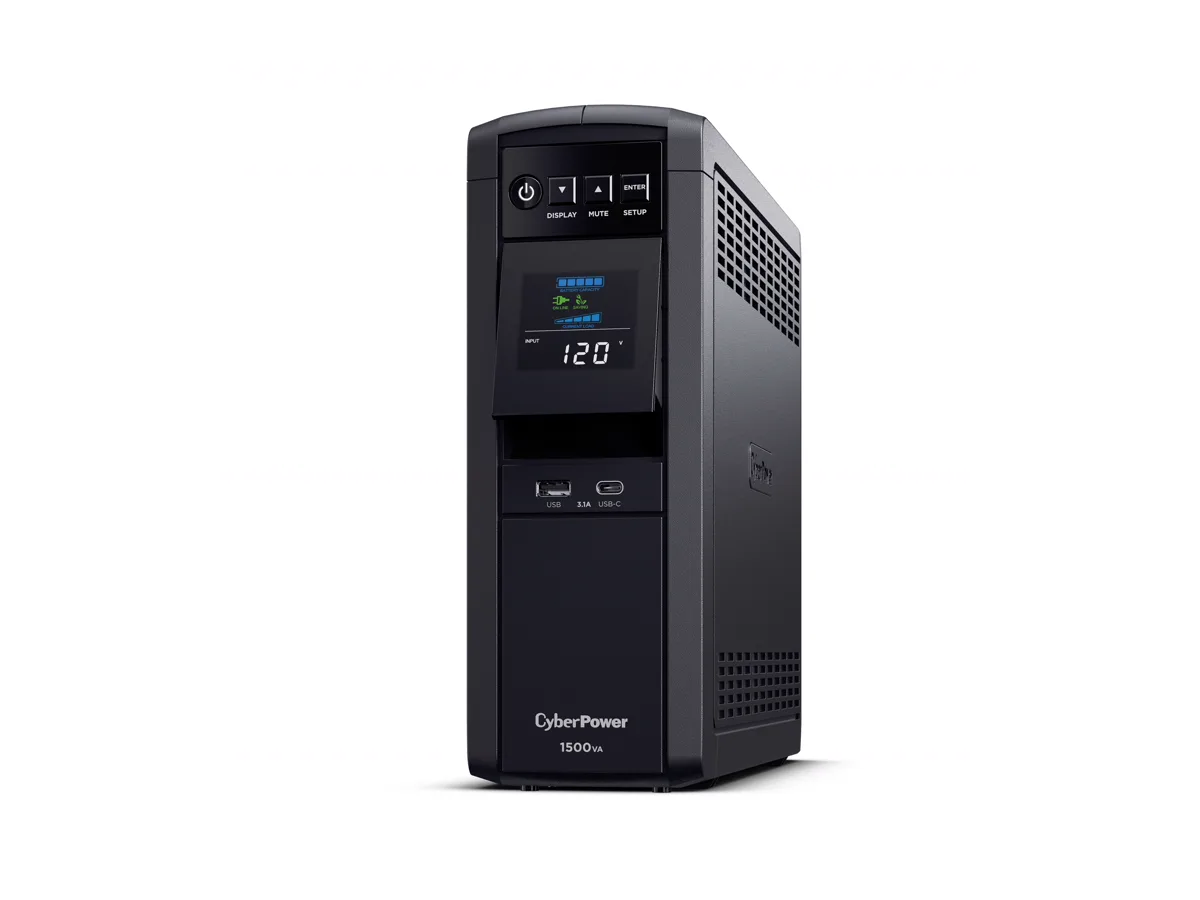
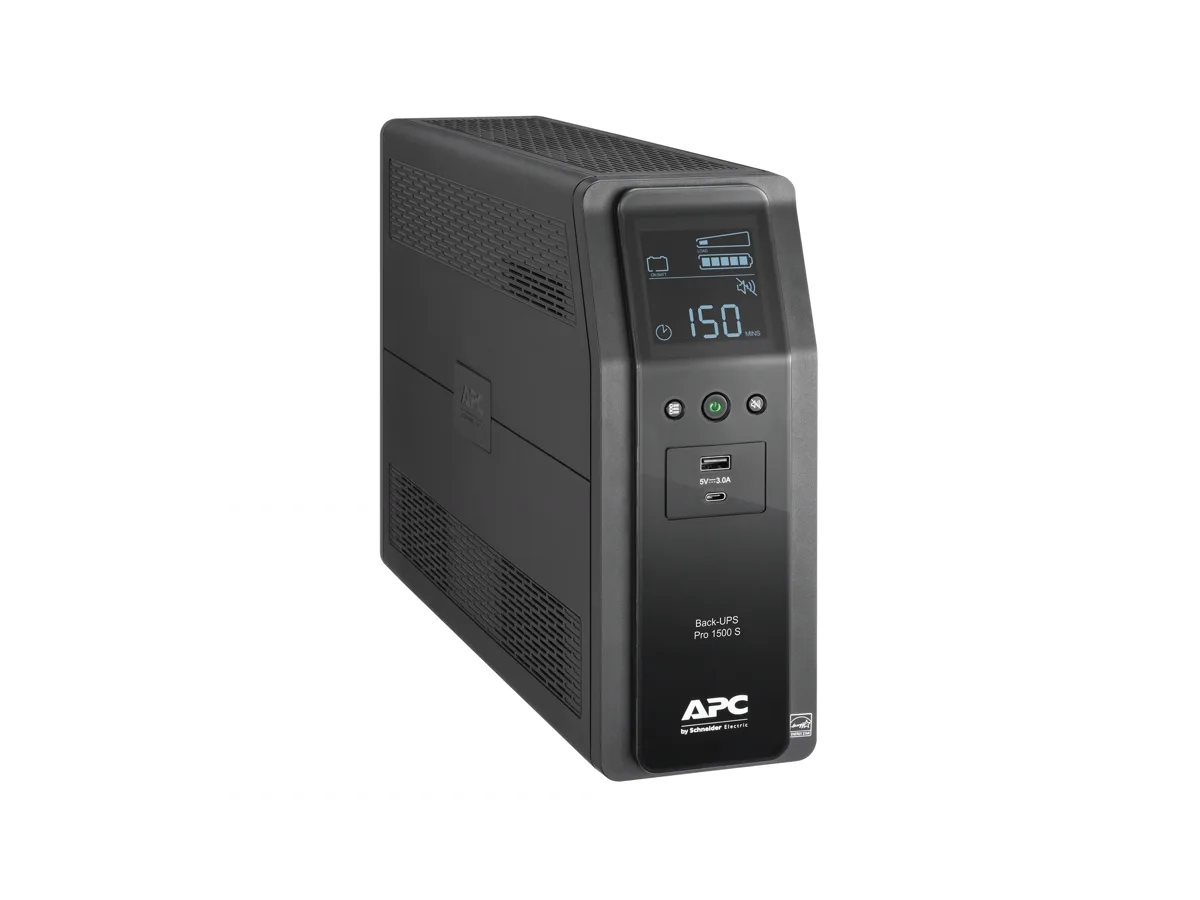
Read the watts, not the VA. “1500 VA” sounds bigger than it is. The watt figure is the real limit: 1,000 W for the CyberPower below, 900 W for the APC.
Size for what your PC actually draws, not the label on its power supply. An 850 W power supply doesn’t mean the PC pulls 850 W — but a high-end graphics card can. NVIDIA rates the RTX 5090 card alone at 575 W, and a system like that can go past a 900–1,000 W UPS under full load.
Pure sine wave. Most modern PC power supplies use “active PFC”. Both picks put out a pure sine wave on battery; CyberPower markets its unit as active-PFC compatible, and APC says pure sine wave is the cleanest signal for active-PFC equipment.
Amazon listing: “APC BR1500MS2 Pure Sine Wave UPS Battery Backup & Surge Protector” · ASIN B08GRY1W93
How to know what your PC draws
The honest way is to measure: a plug-in power meter shows the wall draw while you run your heaviest game or job. Without one, add up the maker figures for the graphics card and processor and leave generous room for the rest.